How Pet Health Distributors Can Build a Smarter Multi-Channel Sales Strategy ?
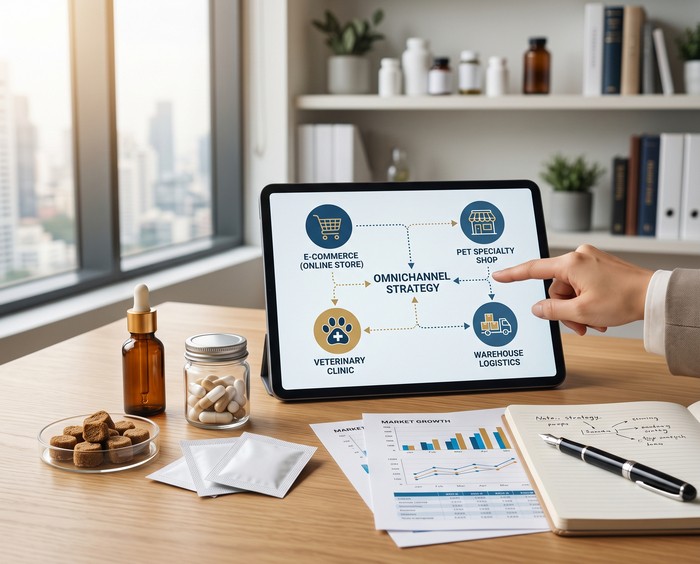
For pet product distributors, the buying journey is no longer a straight line. Pet owners might research supplement information online, compare prices on e-commerce platforms, ask for staff recommendations at a local pet store over the weekend, and ultimately complete their purchase via a brand’s official website.
This shift means a multi-channel strategy isn't just about adding more sales outlets. Without holistic operational planning, blindly expanding channels can trigger inventory imbalances, pricing conflicts, and fulfillment headaches. The core of a multi-channel strategy lies in clarifying the role each channel plays and ensuring product specifications and operations support those specific needs.
Define Channel Roles: What Business Problem Does Each Channel Solve?
The key to multi-channel distribution is role allocation. Different channels interact with consumers differently and should take on distinct sales tasks rather than functioning as interchangeable outlets:
Before expanding, ask a simple question: What specific problem is this channel supposed to solve for the product?
Clarifying whether a channel is intended for new customer acquisition, product education, trust building, or repeat purchases is more effective than simply pushing the same product across every available outlet.
Move Beyond a Single KPI: Different Channels Need Different Metrics
Channel value shouldn't be judged by total revenue alone. Set specific metrics based on the channel's intended role within your overall sales funnel to avoid overlooking its true contribution. If every channel is evaluated solely on Gross Merchandise Value (GMV), distributors can easily overlook the unique value each channel creates.
For example:
For example, a specialized pet supplement might not generate significant direct sales through veterinary clinics. However, the product education and trust built there can help consumers better understand the supplement and may also influence purchasing decisions across other channels. A channel should therefore be evaluated by whether it fulfills its intended role, not simply by how much revenue it generates in the short term.
Operational Coordination: Preventing Expansion from Creating Internal Conflicts
Adding channels is easy; coordinating them is the real challenge. Without unified pricing, inventory, product information, and supply management, expanding your channel network can also increase operational costs.
When the same product flows into e-commerce, specialty retail, and wholesale simultaneously, distributors must align pricing structures and supply processes. Otherwise, they may face:
Multi-channel management isn't just about placing products in more stores. Pricing, inventory, product information, and supply processes need to work together across the channel network.
Product-Channel Fit: Slow Sales Can Be a Matter of Channel Misalignment
A product’s dosage form, packaging, usage requirements, and product information can all influence which sales channels are most suitable for it. When a product stalls in a specific channel, the marketing budget isn't always to blame. The product itself may simply not fit the purchasing environment or customer experience of that channel.
For example:
Before pushing a product into a new channel, distributors should ask: In what environment is this product easiest to understand, choose, and use? If the product does not fit the purchasing context of a particular channel, simply increasing advertising or exposure may not solve the underlying sales problem.
Developing Products Based on Target Channel Needs
If a distributor has a clear target channel, product development can start from that channel’s specific requirements, including dosage form, palatability, packaging, and product positioning. Development doesn't have to start by asking, “What's currently on the market?” It can also start by asking, “What is our target channel missing?”
For example, does a product intended for professional channels need more comprehensive product information and usage guidance? If the product is primarily sold online, is the packaging information clear and easy to understand? Do different channels require different product sizes or product combinations? Considering these factors during the early stages of product development can make it easier to connect the finished product with actual channel requirements when it enters the market.
As a pet supplement and pet food OEM/ODM development and manufacturing partner, SINGEN has veterinarians and pharmacists involved in product development and professional review. By grounding the OEM/ODM process in market needs and product positioning, SINGEN can further evaluate formulation, dosage form, and packaging specifications so that product development is better connected to actual channel requirements from the beginning.
The Core of Multi-Channel Strategy: Making Products and Channels Work Together
True multi-channel value doesn't come from being present in as many channels as possible. It comes from allowing each channel to serve its intended purpose while maintaining coordination across pricing, inventory, product information, and supply.
Before entering your next sales channel, confirm three things:
When product positioning, channel roles, and operational requirements are considered together from the beginning, a multi-channel strategy can become more than an expansion of sales outlets. It can become a more integrated approach to market development.
Developing Pet Health Products for Specific Channels?
If you are planning a new pet supplement line or developing a product for a specific sales channel, SINGEN can help evaluate your OEM/ODM development direction across formulation, dosage form, and packaging specifications.
👉 Learn More About SINGEN’s Pet Supplement OEM / ODM Services